

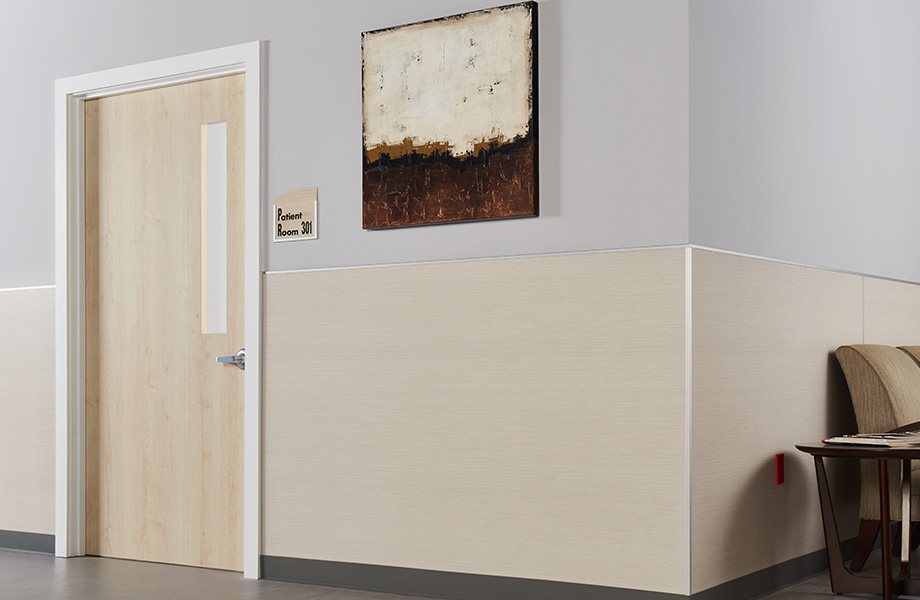
Walls in high-traffic commercial and industrial facilities take a beating that most building designs don’t fully account for. Forklifts, carts, foot traffic, moisture, cleaning chemicals, and repeated impact all wear on interior surfaces in ways that standard drywall or painted finishes simply aren’t built to handle. Facility owners searching for durable alternatives , including pvc wall panels canada , are often responding to exactly this problem. In facilities like food processing plants, commercial kitchens, and distribution centers, wall damage isn’t just cosmetic; it can create sanitation risks, maintenance costs, and even compliance issues that affect how the facility operates day to day.
The Hidden Cost of Wall Damage
A damaged wall in a high-traffic area rarely stays a small problem. Cracked or chipped surfaces trap moisture and debris, creating conditions where bacteria and mold can take hold , a serious concern in any facility handling food or requiring strict sanitation standards. Beyond the sanitation risk, damaged walls require ongoing patching, repainting, and repair, and that maintenance cycle adds up over the life of a building. Facilities that don’t plan for wall durability from the start often end up paying for that decision repeatedly, in small amounts, for years afterward.
Moisture and Chemical Exposure Change the Equation
Standard interior finishes are typically designed for dry, low-impact environments, which makes them a poor fit for spaces that see regular washdown, chemical cleaning, or humidity. Commercial kitchens and food processing areas are often hosed down or scrubbed with sanitizing chemicals on a daily basis, and that kind of repeated exposure will degrade paint, drywall, and many standard wall finishes far faster than the rest of the building. Selecting a wall system rated for moisture and chemical exposure up front avoids a cycle of replacement that becomes more disruptive the longer a facility stays in operation.
Impact Resistance Matters More Than It Seems
Forklifts, hand trucks, rolling carts, and general foot traffic all create a steady stream of minor impacts that most wall finishes weren’t designed to absorb. Any single impact might seem insignificant, but in a facility running multiple shifts, those impacts accumulate quickly. Wall systems built with impact resistance in mind hold up under that kind of repeated contact without cracking, chipping, or requiring constant touch-up, which matters both for appearance and for the practical reason that damaged walls are harder to keep clean.
Sanitation-Driven Industries Have Additional Requirements
Facilities operating under food safety or health regulations often need wall systems that go beyond general durability. Seamless, non-porous surfaces that don’t harbor bacteria, resist staining, and can be cleaned repeatedly without degrading are frequently a practical necessity rather than a preference. This is one of the reasons buyers in food-grade and sanitation-sensitive industries specifically seek out PVC-based wall systems; the material properties solve a problem that standard interior finishes create.
Planning for Durability Reduces Downtime
Every wall repair in an active facility creates some level of disruption, whether that means blocking off a section of a production floor, working around equipment, or scheduling maintenance during limited downtime windows. Facilities that select wall systems built for their actual operating conditions , impact, moisture, chemical exposure , spend less time on that kind of reactive maintenance and more time running normally. That’s a meaningful efficiency gain that’s easy to overlook when wall material decisions get made early in a project and then not revisited until something breaks.
Matching the Wall System to the Environment
Not every high-traffic space has the same requirements. A commercial kitchen dealing with grease, steam, and daily washdown has different needs than a distribution center dealing primarily with impact from equipment traffic, and both differ from a food processing facility operating under strict sanitation codes. Choosing a wall system based on the specific demands of the space, rather than defaulting to whatever’s standard for general commercial construction, tends to produce better long-term results and fewer surprises once the facility is in full operation.
The Takeaway
Interior wall protection is easy to underestimate during the design phase of a project, but the cost of getting it wrong shows up repeatedly over the life of a building , in maintenance, in downtime, and in sanitation risk for facilities that can’t afford to get that wrong. Selecting a wall system built for the specific conditions of a high-traffic facility, rather than a general-purpose finish, is one of the more reliable ways to avoid that cycle and keep a facility running smoothly.