

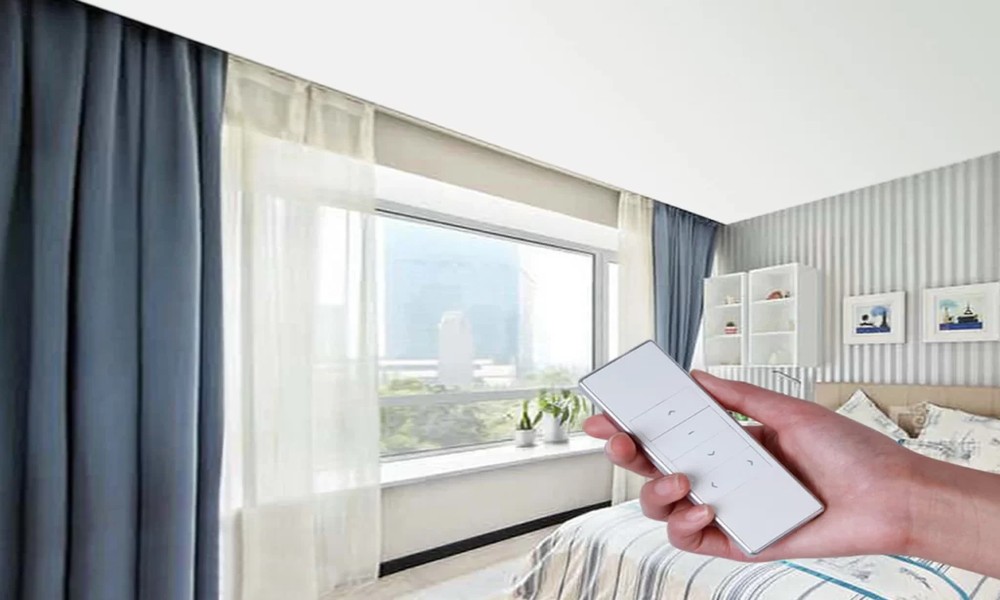
Remote control curtains are no longer a luxury reserved for penthouses and show flats. In Singapore, where smart home technology has moved firmly into the mainstream, motorised curtain systems are becoming a practical consideration for homeowners across every housing type. But the question most people ask before investing is straightforward: are they actually worth the money, or are they an expensive convenience you will stop using after the novelty wears off?
The honest answer depends entirely on how you use your curtains, how your home is laid out, and what problems you are trying to solve. For some homeowners, remote control curtains are genuinely transformative. For others, they are an upgrade that delivers marginal benefit at significant cost.
How Remote Control Curtains Work
A motorised curtain system replaces the manual drawing of curtains with an electric motor mounted on or inside the curtain track. The motor drives the curtain carriers along the track, opening or closing the curtains at the touch of a button. Control options typically include a handheld remote, a wall-mounted switch, a smartphone app, or voice commands through smart home platforms like Google Home or Apple HomeKit.
The remote control curtain system is compatible with most curtain styles, including S-fold, wave fold, and pinch pleat headings. The motor operates quietly and moves the fabric at a controlled speed, eliminating the tugging and jerking that can stress fabric and tracks over time.
When Motorised Curtains Are Worth Every Dollar
Certain situations make remote control curtains not just convenient but genuinely practical.
High or hard-to-reach windows.
Floor-to-ceiling windows, double-volume spaces, and windows above furniture or built-in cabinetry are difficult or impossible to reach by hand. Motorised tracks solve this problem entirely.
Multiple windows in a single room.
Open-plan living rooms with three or four windows require multiple trips across the room to adjust curtains manually. A single remote command operates all of them simultaneously.
Elderly or mobility-limited residents.
For households with elderly family members or anyone with limited mobility, motorised curtains remove the physical effort of drawing heavy fabric.
Daily routine automation.
Motorised curtains paired with a timer or smart home integration can open and close on a schedule. Curtains open at sunrise to let in natural light. They close at dusk for privacy. This happens whether you are home or not.
Large or heavy curtains.
Full-length blockout curtains in thick fabric are heavy. Drawing them manually twice a day wears out tracks, heading tapes, and the homeowner’s patience.
As Lee Kuan Yew once stated, “We must think of practical solutions, not ideological ones.” Motorised curtains are a practical solution to real daily friction points.
When They May Not Be Necessary
Not every home benefits equally from motorisation.
- Small windows with light curtains. If your curtains are easy to reach, lightweight, and only cover a small span, the manual effort is negligible. Motorisation in this scenario adds cost without meaningful benefit.
- Rental properties. Installing a motorised track system in a rental property is a significant investment that you cannot take with you when you move. Portable solutions exist but compromise on quality and reliability.
- Budget constraints. If the choice is between motorised curtains with cheap fabric or manual curtains with premium fabric, most homeowners would benefit more from investing in fabric quality.
Cost Breakdown
The cost of motorised curtain systems in Singapore varies depending on window size, motor brand, number of tracks, and smart home integration requirements.
- Motor unit. The motor itself typically costs between three hundred and eight hundred dollars per track, depending on the brand and features.
- Track system. A motorised curtain track system is more robust than a standard manual track and priced accordingly.
- Smart home integration. Adding Wi-Fi connectivity for app control or compatibility with voice assistants may require additional modules or a central hub.
- Installation. Professional installation includes electrical work for power supply to each track. This is essential and should not be attempted as a DIY project.
- Fabric. The curtain fabric itself is the same regardless of whether the track is manual or motorised. There is no additional fabric cost.
For a typical three-bedroom HDB flat or condominium, a full motorised curtain installation across all rooms costs between three and six thousand dollars above the cost of standard curtains.
Choosing the Right System
When selecting a motorised curtain system, focus on these factors.
- Motor noise. The best motors operate at under 35 decibels, quieter than a whisper. Test the motor in a showroom before committing.
- Load capacity. Ensure the motor is rated for the weight of your curtain fabric. An underpowered motor strains, slows down, and wears out prematurely.
- Control options. At minimum, the system should include a remote and a wall switch. App control and voice integration add convenience for tech-savvy households.
- Backup manual operation. A good motorised system allows you to draw the curtains by hand if the motor or power fails. Systems that lock when power is cut are inconvenient during outages.
- Supplier reputation. Choose a motorised curtain supplier in Singapore with proven experience in installation and after-sales support.
Making the Decision
The question is not whether remote control curtains are a good product. They are. The question is whether they solve a specific problem in your home that justifies the investment. If you have large windows, heavy curtains, multiple rooms to manage, or residents who would benefit from automation, motorised curtains are among the smartest home upgrades available today. If none of those conditions apply, your money may deliver more value elsewhere.