

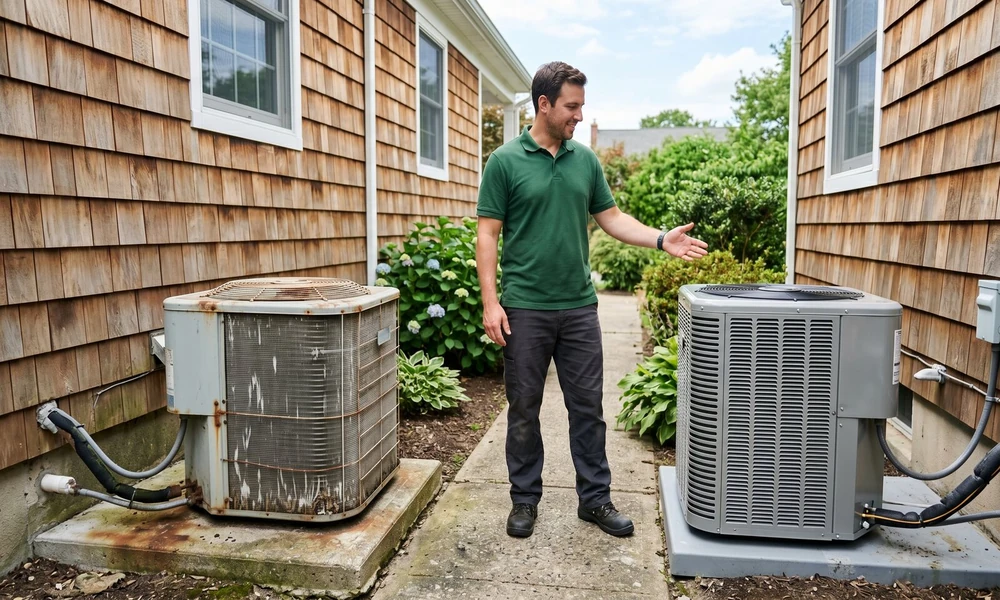
Your air conditioner does more than keep your home comfortable during hot weather. It also affects indoor humidity, energy use, and the overall reliability of your cooling system. If your unit has been running for many years, frequent repairs or rising utility bills may be signs that it is time to consider replacing an older air conditioner rather than continuing to invest in an aging system.
An older AC unit will not necessarily need immediate replacement simply because of its age. However, several warning signs can indicate that a new system could provide better comfort, efficiency, and reliability. Understanding those signs can help you make a practical decision before your existing system fails during the hottest part of the year.
1. Your Energy Bills Keep Increasing
One of the clearest reasons to evaluate an aging air conditioner is a gradual increase in cooling costs. As equipment gets older, components can wear down, airflow can become less effective, and the system may need to run longer to maintain the thermostat setting.
Higher energy bills do not automatically mean the AC is the problem. Poor insulation, air leaks, dirty filters, ductwork issues, and changes in household usage can also affect energy consumption. Still, if your cooling costs have increased while your habits have stayed relatively consistent, having the system inspected is worthwhile.
A newer, properly sized air conditioner may operate more efficiently than an outdated system. The potential benefit is not simply lower energy use; improved efficiency can also make it easier for the system to maintain consistent indoor temperatures.
2. Repairs Are Becoming More Frequent
Every air conditioner eventually needs maintenance and repairs. The question is whether continued repairs make financial sense for an aging system.
If you have needed multiple service calls in recent years, those expenses can begin to add up. Replacing one failed component may solve the immediate problem, but another aging component could require attention later.
Consider replacement when you notice a pattern such as:
Repeated breakdowns during cooling seasonSeveral major components needing repairIncreasing repair costsDifficulty finding replacement parts for an older systemRecurring problems shortly after serviceA qualified HVAC professional can assess the condition of the equipment and help you compare the likely cost of continued repairs with the cost and benefits of a replacement.
3. Your Home Is No Longer Cooling Evenly
An air conditioner should distribute cool air throughout the home reasonably consistently. If some rooms remain warm while others become noticeably colder, the problem may involve the ductwork, thermostat, insulation, airflow, or the AC itself.Older systems can also struggle to keep up when outdoor temperatures rise. You may notice the unit running for long periods without reaching the temperature shown on the thermostat.Before replacing the equipment, it is important to identify the underlying cause. In some cases, a relatively simple repair or ductwork adjustment can resolve uneven cooling. If the equipment itself is undersized, deteriorating, or unable to meet the home’s cooling demands, replacement may be the more practical long-term solution.
4. Your Air Conditioner Is Getting Too Old
Age alone should not determine whether an air conditioner needs to be replaced, but it is an important part of the decision.Older equipment may have more wear on motors, electrical components, coils, fans, and other parts. It may also lack efficiency and features found in newer systems. When an older unit develops a significant problem, the repair decision becomes more complicated because you are investing money into equipment that may have additional years of service behind it.This is where planning ahead can make a difference. Replacing an aging system before a complete breakdown gives you time to compare equipment options, evaluate installation requirements, and schedule the work when it is convenient rather than during an emergency.
5. You Want Better Comfort and Reliability
Modern air conditioning is not only about producing cold air. A properly selected and installed system can help provide more consistent temperatures and better control over indoor comfort.If your current AC frequently struggles on very hot days, requires repeated attention, or leaves certain areas of your home uncomfortable, upgrading may improve your day-to-day experience.Professional installation is especially important because the equipment needs to be correctly matched to the home. A system that is too large or too small can create comfort and performance problems, even if the equipment itself is high quality. For homeowners considering replacing an older air conditioner, working with an experienced HVAC professional can help ensure the replacement is properly evaluated and installed.
What to Consider Before Replacing Your AC
Replacing an air conditioner is a significant home decision, so avoid choosing a new system based solely on the purchase price. Look at the bigger picture.Start by considering the condition and age of your existing equipment. Then review its repair history, current performance, energy consumption, and ability to cool the entire home. You should also consider whether your household’s cooling needs have changed since the current system was installed.Ask an HVAC professional about system sizing, efficiency, installation requirements, thermostat compatibility, and any ductwork concerns. Getting a clear assessment before purchasing equipment can help prevent an expensive mismatch.
Common Mistakes Homeowners Make
One common mistake is waiting until an AC system fails completely before thinking about replacement. Emergency decisions can leave homeowners with fewer opportunities to compare systems and schedule installation on their preferred timeline.Another mistake is choosing equipment based only on the highest efficiency rating. Efficiency matters, but the right system also needs to be correctly sized for the home and installed properly.Finally, do not assume every cooling problem means the entire system needs to be replaced. A professional inspection can distinguish between a repairable issue and equipment that has reached the point where replacement makes more sense.
When Should You Replace an Aging Air Conditioner?
There is no single replacement date that applies to every household. Instead, look at the combination of age, repair frequency, operating costs, comfort, and reliability.If your air conditioner is aging and several of these warning signs are appearing at the same time, it is reasonable to have a professional evaluate your options. Even if replacement is not immediately necessary, understanding the condition of your system can help you plan ahead and avoid an unexpected loss of cooling.
Conclusion
An aging air conditioner can affect much more than your home’s temperature. Increasing energy bills, frequent AC repairs, uneven cooling, declining performance, and recurring breakdowns may all indicate that your current cooling system is approaching the end of its useful service life. Recognizing these warning signs early allows homeowners to make an informed decision instead of waiting for an inconvenient system failure during extreme summer heat.When considering air conditioner replacement, look at the complete picture rather than focusing on age or upfront cost alone. A professional HVAC evaluation can help determine whether repairing the existing unit remains practical or whether installing a newer, properly sized air conditioning system offers better long-term value. Choosing the right equipment and ensuring professional installation can also support reliable cooling, improved comfort, and efficient system performance for years to come.
========================================================================