

Why Calgary Driveways Need Regular Sealing
A Calgary driveway operates in one of the more demanding environments for outdoor concrete in Canada. The combination of temperature extremes — hot summers that can exceed 30°C and winters that regularly reach -30°C or below — creates freeze-thaw cycling that can affect even well-poured concrete surfaces over time. Salt and de-icing chemicals used for winter safety penetrate concrete pores and accelerate surface deterioration. UV exposure during Alberta’s long summer days degrades unsealed surfaces that would hold up better in less intense light environments.
Regular sealing is the maintenance intervention with the most consistent impact on driveway longevity. A properly sealed driveway sheds water rather than absorbing it, significantly reducing freeze-thaw damage. Salt penetration is reduced. UV degradation of the surface is slowed. The cumulative effect over a driveway’s lifespan is meaningful: sealed driveways in Calgary consistently show better surface condition after ten to fifteen years than equivalent unsealed driveways in the same conditions.
The sealing interval for a Calgary driveway is typically two to three years for high-traffic residential driveways. Driveway Sealing Calgary should be scheduled in late spring or early fall — the windows when temperature and humidity conditions are consistently within the application range that allows proper sealer cure without the application stress that summer heat or fall cold creates.
What the Sealing Process Involves
Surface preparation is the most critical determinant of how long a new sealer application will last. An existing sealer that is peeling or in poor condition needs to be stripped before new sealer is applied — new sealer bonded to failed old sealer fails at the same rate as the old sealer. Oil staining on the surface requires degreasing treatment before sealing; sealer applied over oil contamination will not bond to the concrete in the contaminated areas.
Crack repair before sealing is the maintenance step that most significantly extends the sealing cycle. Cracks that allow water infiltration beneath the sealed surface defeat the purpose of sealing; water that enters through cracks can freeze and expand, worsening the crack and potentially delaminating the sealed surface around it. Filling cracks with appropriate concrete repair products before sealing addresses the infiltration pathways that compromise the sealed surface.
The sealer application itself requires appropriate temperature, low wind, and dry surface conditions. Most Calgary contractors use squeegee or spray application depending on the sealer product and the surface condition. Multiple thin coats outperform a single heavy coat — thin coats penetrate more effectively and cure more uniformly than heavy applications that can trap gases from the concrete and create surface bubbles.
Portland Cement Association technical resources on concrete sealer application cover application methods, coverage rates, and the performance expectations for different sealer types in cold-climate conditions.
What a Quality Sealing Job Looks Like
A quality driveway sealing job starts with honest assessment of the surface condition — identifying cracks, scaling, oil contamination, and previous sealer condition — and proposing the preparation work needed before sealing. A contractor who quotes sealing without surface assessment is either planning to skip preparation or has not looked carefully at the surface.
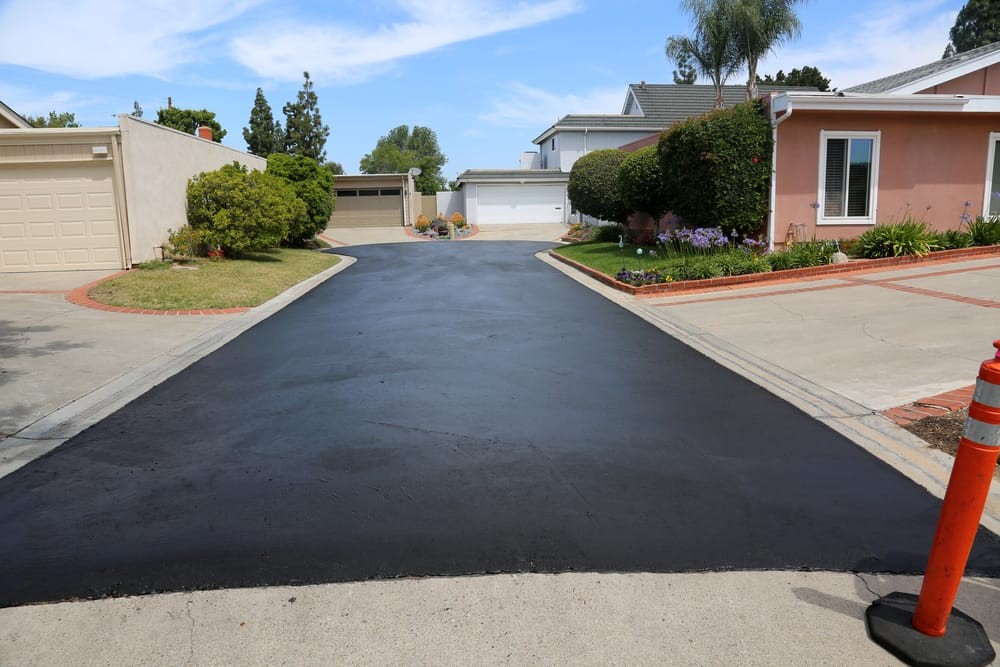
The finished sealed surface should show uniform coverage without areas of over-application (which puddle and cure unevenly) or missed coverage. On penetrating sealers, the surface appearance change is minimal — slightly darker, with improved water beading. On film-forming sealers, the surface has a visible sheen that confirms coverage.
A reputable contractor provides documentation of the specific sealer product applied, including the manufacturer name, product line, and coverage rate — information needed for future resealing projects, warranty claims, and confirmation that the specified product was actually used.