

Why Reading Light Matters More Than General Illumination
Reading involves sustained visual focus at close range for extended periods – the exact conditions under which inadequate light creates eye strain, headaches, and reading fatigue. The light quality needed for comfortable reading is specific: adequate brightness at the page surface, directed light that reduces glare from surrounding surfaces, and warm-to-neutral color temperature that renders text contrast accurately without creating the alerting effect of cool blue-white light.
General room illumination from an overhead fixture is almost never adequate for sustained reading. The directionality is wrong – overhead light creates shadows on the page rather than illuminating it directly – and the brightness level that is comfortable for the room as a whole is typically below the 450 to 550 lux recommended for sustained reading tasks. A dedicated reading lamp positioned to deliver light directly to the page surface addresses both problems.
How to choose a reading lamp is a decision that depends on the specific reading context: bedside reading, a dedicated reading chair, a home office reading area, or a sofa reading position each has different positioning requirements and different constraints on the type of fixture that works.
The Specifications That Determine Reading Light Quality
Lumen output at the reading surface – not the fixture’s total lumen output – is the relevant specification for reading light. A fixture rated at 800 lumens that directs most of that output away from the page provides less reading light than a 400-lumen fixture with a directed reflector that puts all its output at the reading surface. Testing the fixture in the intended reading position, rather than evaluating it in showroom conditions, is the reliable assessment method.
Color Rendering Index (CRI) matters for reading in a way it does not for ambient lighting. A lamp with CRI above 90 renders the contrast between text and paper more accurately and with less visual effort than one with CRI below 80. The difference is subtle in isolation but cumulative across a two-hour reading session. High-CRI LED bulbs are available at modest price premiums and are worth specifying for dedicated reading lamps.
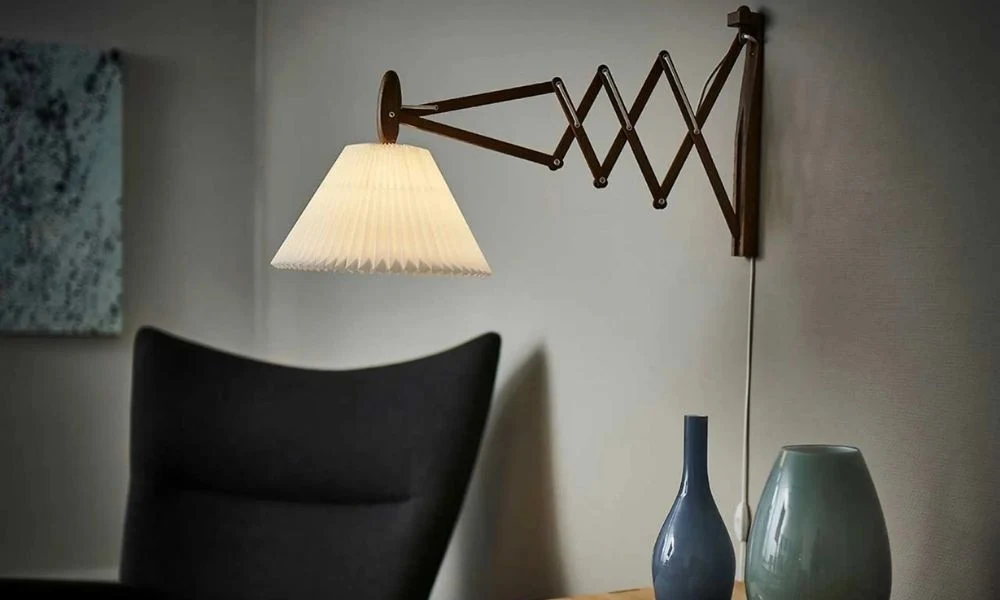
Adjustability – the ability to direct the lamp’s output specifically at the current reading position rather than at a fixed point – distinguishes reading lamps from general table lamps. Articulating arm lamps that allow repositioning both the arm height and the shade angle serve multiple seating positions and reading postures; fixed-position lamps that happen to be adequately bright work adequately but provide less flexibility.
Energy Star certified LED bulbs for reading lamps confirm that the color temperature and CRI stated are independently verified – important for confirming that a warm-white, high-CRI bulb actually delivers those characteristics.
Positioning for Different Reading Contexts
Bedside reading lamp positioning should place the light source slightly behind and above the reading position – creating light that falls onto the page without shining into the reader’s eyes or the eyes of a sleeping partner beside them. A swing-arm sconce mounted at the head of the bed achieves this geometry more reliably than a table lamp, which is typically too low to create the ideal light angle from a bedside position.
A dedicated reading chair benefits from a floor lamp positioned to the left and slightly behind a right-handed reader (reversed for left-handed) – placing the light source where it illuminates the page without creating glare from the page surface or casting a shadow from the reader’s hand. This classic reading lamp position has not changed because it is biomechanically correct for the reading task.
Sofa reading is the most variable context because seating position within the sofa changes. A floor lamp or table lamp on an articulating arm positioned at the end of the sofa provides the most flexibility; a fixed lamp in a fixed position works for the reader who consistently sits in the same place and less well for other configurations of the same seating area.